

18 Nov, 2026
You have a steel coil almost in place, but the final movement takes longer than expected. We understand how tiring those repeated corrections can feel when the next load is already waiting. As a Remote crane control supplier in India, we look closely at these moments. At NIKKA Inc., our starting point is simple: what makes an otherwise routine lift difficult to finish well?
Perhaps you recognise that pressure. A load moves slightly beyond the intended spot, another adjustment follows, and the shift starts slipping behind. We cannot remove every challenge with a wireless handset. We can, however, help you assess whether better visibility and suitable controls would make each movement easier to judge.
We tend to notice crane speed when watching material move across a bay. Yet the most demanding part often comes near the landing point. Lowering a coil onto a saddle or placing a bundle between supports needs patience. A quick movement means little if you spend extra time correcting the final position.
We see precision as the ability to place a load with fewer unnecessary corrections, within the task’s agreed limits. That depends on several things working together. Load balance, braking, lifting gear, drive response and visibility all play a part. Wireless control can support this work, but cannot compensate for worn brakes or poor rigging.
At NIKKA Inc., we look beyond the handset when discussing a control upgrade. We want to understand where movement becomes awkward and what you can see at that point. Sometimes the concern is speed selection. Sometimes a fixed operating position makes the final approach harder to judge.
Imagine trying to judge a narrow gap while looking across stacked material. You might understand the lift perfectly and still struggle to see the clearance. With wireless control, we can give you more freedom to choose an approved operating position with a clearer view.
That freedom needs a planned working area. We should never treat mobility as permission to walk beneath a suspended load or enter a pinch point. Clear routes, exclusion zones and agreed signals still matter. If the load disappears from view, the lifting plan must address how control and communication continue safely.
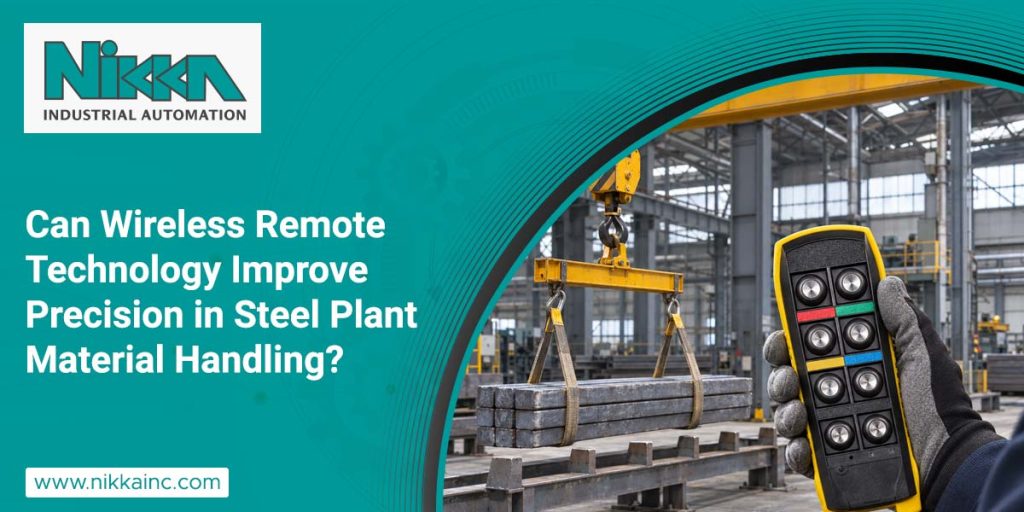
When we supply a Remote for material handling equipment, we assess how the controls fit the actual task. A useful handset should help you focus on the load without making you search for the right button. Clear labels, sensible spacing and a comfortable grip deserve attention during selection.
A wireless command still has to pass through the crane’s control system before anything moves. We therefore need to match the transmitter and receiver with the existing electrical controls. A basic on/off arrangement cannot provide variable speed merely because the pendant has been replaced.
Suitable systems offer stepped speeds or proportional control, depending on the crane and drive arrangement. With proportional control, we can vary the command through joystick or lever movement. Compatible drives then translate that command into controlled motion. HBC offers radio controls for stepless drives, illustrating why the control type must match the application.
At NIKKA Inc., we bring motion control and panel knowledge into this discussion. We assess the whole control path before recommending a setup. If the crane starts sharply or stops inconsistently, we need to understand why. Changing the handset alone may leave the same frustrating behaviour in place.
We start with practical questions about your everyday lifts. These questions help us avoid choosing features that sound useful but add little on the floor.
Heat, dust, vibration and busy crane bays create demands that a product photograph cannot show. We need to review the expected exposure at both the handset and receiver locations. An enclosure rating alone does not tell us whether equipment suits every hot or dusty area.
As a Radio remote control supplier in India, we consider the operating environment alongside the required functions. Radio coverage also needs assessment across the intended working area. Steel structures, equipment positions and other radio systems can affect performance, so we should verify operation where you actually work.
At NIKKA Inc., we also consider the less exciting details that matter during a long shift. Battery charging, secure handset storage and access to spares affect daily use. A good control arrangement should fit your working routine, including shift changes and fault reporting, without adding avoidable confusion.
A handset feels useful only when you trust how the crane responds. We need clear behaviour when a command ends, an emergency stop is pressed or communication fails. These responses require proper system design and testing. We cannot judge safety from the presence of a red button alone.
We treat receiver logic, control interfaces and interlocks as part of the same assessment. Steel industry guidance for EOT crane radio controls addresses these elements together, including valid command handling. The required stopping behaviour must suit the crane and its assessed risks.
As a Remote crane control supplier in India, we keep these checks central to the discussion. Wireless operation does not replace training, inspections or a sound lifting plan. It gives you another way to issue commands. Safe, precise handling still relies on the condition of the equipment and disciplined operation.
You do not need a dramatic claim to decide whether an upgrade helps. We can start with one repeated handling task and record what happens. How many corrections are needed? How long does the final placement take? Does the approach feel consistent across comparable lifts?
At NIKKA Inc., we favour agreed checks over vague promises of better output. We can compare placement time, repeat movements and control response under similar conditions. The aim is to understand whether the change addresses your original concern, rather than simply proving that the new remote works.
When we recommend a Remote for material handling equipment, we also consider familiarisation. A different button layout or joystick response can take time to learn. We should allow controlled practice before judging results during normal production. Early feedback can reveal awkward labels, unclear directions or speed settings that need review.
You may already know which movement needs attention: the coil placement that takes several attempts or the awkward loading position. We would begin there. At NIKKA Inc., our automation work dates back to 1997, and our wider capabilities include motion control, electrical panels and process instruments.
As a Radio remote control supplier in India, we help you connect the control choice with the handling problem. Wireless technology can improve precision when visibility, response speed and crane condition support the same goal. Our next step at NIKKA Inc. is a practical discussion about your crane, your loads and the movements you want to improve.
At NIKKA Inc., we supply wireless controls that support clearer load visibility and suitable speed selection, helping reduce repeated positioning corrections.
Wireless control lets you choose a safe position with a clearer view. At NIKKA Inc., we consider viewing angles alongside crane control needs.
Yes. At NIKKA Inc., we assess existing panels, wiring, crane functions and safety circuits to establish whether a compatible wireless upgrade is suitable.
No. Variable speed requires compatible drives and control interfaces. At NIKKA Inc., we match remote functions with your crane’s existing speed control arrangement.
Suitable industrial models can, within specified limits. At NIKKA Inc., we review temperature exposure, dust protection and receiver placement before recommending equipment.
The system must bring the crane to its defined safe state. At NIKKA Inc., we consider signal-loss response when assessing the control arrangement.
Radio interference can interrupt communication. At NIKKA Inc., we consider frequency management, transmitter pairing and site testing to support reliable operation across busy bays.
At NIKKA Inc., we review load movements, crane controls, working conditions and operating positions to recommend a remote suited to your handling tasks.
Sway also depends on acceleration, braking, suspension length and operating technique. Smooth commands can help, but dedicated sway control requires additional functionality.
Yes. Training should cover motion controls, safe standing positions, emergency stops, pre-use checks and signal-loss procedures before wireless operation begins during normal production.
Follow the manufacturer’s schedule for checking buttons, joysticks, enclosures and batteries. Report faults promptly and arrange authorised repairs before returning defective equipment to service.
Compare placement time, correction movements and positioning consistency across similar lifts. Include operator feedback and verified safety performance when judging the upgrade’s value.

