

09 Dec, 2025
When we talk about heavy industries, we often picture large sites, harsh work zones, and teams who must stay alert at every second. At NIKKA, we understand this pressure well. We have spent more than 30 years building automation systems that help teams work with skill, care, and total trust in their tools. As a remote crane control supplier in Gujarat, we have seen how smart remote solutions change daily operations. These systems add speed, control, and peace of mind to jobs that demand perfect timing and safe moves.
Heavy lifting is a core part of many plants today. When large loads shift even slightly, the risk rises for both people and assets. This is why remote crane controls are no longer a choice; they are now a vital part of any smart plant. At NIKKA, we design and deliver systems that bring smooth movement, steady signals, and clear command over every lift. We build them with the same care we bring to all our automation panels, motion control tools, and CNC control systems. We want teams to feel confident that their cranes will respond when they act, even in tough settings.
Better Control in Tough Work Zones:
Heavy industries deal with heat, dust, noise, and limited space. These conditions make manual crane operation hard. Standing near the crane is not always safe. With remote systems, we shift the operator to a clear and open spot with a full view. This one change brings a major jump in safety. We see this every time we deploy a remote for material handling equipment at client sites.
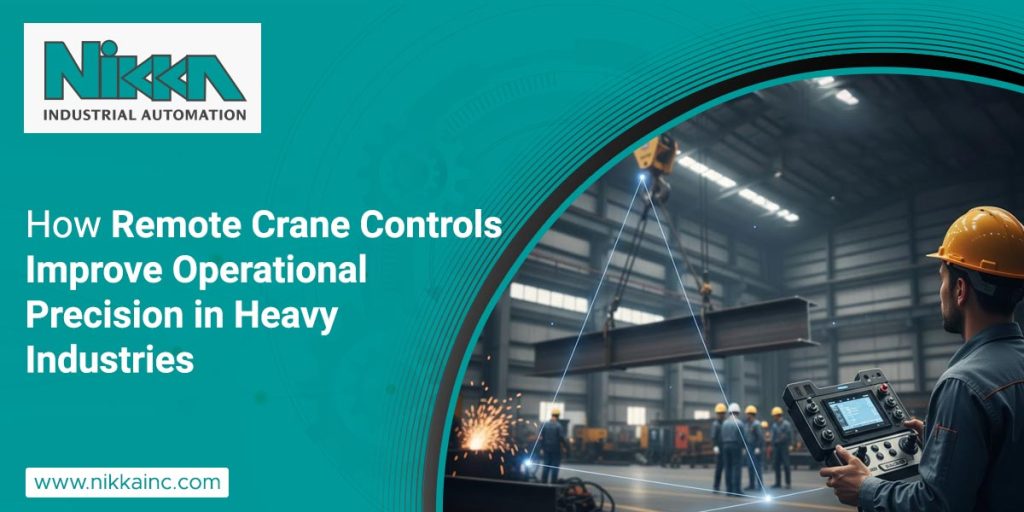
Remote crane controls allow operators to work from ground level or from a safe booth. They can judge space better, check angles, and act without stress. This control reduces errors that come from blind spots. It also helps us manage loads with slow, steady moves that protect both machines and people.
Precise Movement for Large Loads:
Every load behaves differently. Some are long and bend. Some are heavy but stable. Some swing if moved fast. With a remote system, we can tune speed, lift, and swing control to match each type of load. This fine control is one of the main ways remote crane systems improve precision.
At NIKKA, we use smooth signal transfer and well-built controls to help teams handle these moves with ease. We believe precision is more than a number; it is a feeling. Operators should feel connected to the machine. They should sense how the load reacts the moment they press a button. We build our systems to deliver that experience.
Safer Lifts in Hazard Zones:
Many plants work with chemicals, heat, or sparks. Standing close to a crane in such zones may expose workers to harm. Remote crane controls remove that risk. Operators can stand far from dust, heat, or fumes while still guiding the load with steady hands.
We see great results when teams shift to remote systems. Accidents drop. Stress reduces. Work becomes smooth. Even the layout of the site stays cleaner, as movement planning becomes easier. When we deploy a remote for tower crane in India, we often hear from teams that they feel calmer and more in control than they did with manual levers near the cabin.
Better Productivity Without Added Strain:
Heavy industries often run long shifts. Operators must stay sharp for hours. Manual crane operation can be tough on the hands, eyes, and back. Remote crane systems ease this pressure.
With a small, light remote device, the work feels less draining. Operators can shift position, stretch, or move closer to a spot with a better view. This comfort adds direct value to productivity. When the operator feels better, the crane performs better.
At NIKKA, we focus on these human details. We believe machines should support people, not the other way around. Our remote panels and automation systems follow this principle across all projects.
Fewer Breakdowns and Lower Costs:
Cranes face constant movement, dust, and vibration. Remote systems reduce wear on cabins and manual control parts. When the operator does not sit inside the crane for hours, the machine faces less strain. Fewer moving parts means fewer repairs.
Remote systems also help teams run cranes with steady, soft moves. These moves reduce jerks and impact on gears, motors, and brakes. The result is longer machine life and lower maintenance costs. Across many plants, we see these savings build up over time.
As a remote crane control supplier in India, we have built systems that stay stable in harsh sites, from steel plants to chemical units. Reliability is a key reason clients trust our automation work.
Faster Emergency Action:
Heavy industries should always stay ready for emergencies, fire, leaks, sparks, or sudden load shifts. Remote crane controls support fast response. Operators can guide cranes away from danger, clear blocked paths, or drop loads safely with quick action.
We also deliver solutions that work with alarm systems or plant shutdown tools. This adds another layer of safety. When we supply a fire fighting remote supplier in India, we ensure smooth signal flow, clear button layout, and a strong build so teams can act under pressure without confusion.
How NIKKA Adds Value Beyond the Remote?
Remote crane controls are not just devices; they work best when they align with the plant’s full automation design. This is where NIKKA adds strong value. For more than three decades, we have offered motion control, PLC panels, SCADA development, and process instrumentation across many sectors. This helps us understand the crane’s role within the full plant system.
We build remote systems that match the client’s workflow, safety needs, and future plans. We customise controls for different cranes, load types, and operations. We also train teams so they feel confident while using these systems.
Across every project, we keep our core belief strong: machines should support safe, smart, human-led work. Remote crane controls reflect this belief perfectly. They let us lift heavy loads with grace, skill, and care.
Why Remote Crane Controls Will Shape the Future of Heavy Industries?
We see growing demand for remote crane systems across all sectors. Plants want more accuracy. Teams want safer zones. Managers want fewer breakdowns. Remote systems meet all these needs.
As industries grow, loads will grow too. Sites will become tighter. Work will need faster steps. Remote crane systems will help plants run these tasks without stress. At NIKKA, we plan to keep building tools that support these goals with trust and care.
We stand by our clients not only as engineers but as partners who value safe work and smooth movement. When cranes respond with perfect timing, the entire plant feels balanced. This balance is what we aim to bring to every project we handle.
Final Thought:
Remote crane controls do more than lift loads. They protect people, shape safer work habits, and bring precision to tasks that leave no room for error. At NIKKA, we feel proud each time we see a team handle a high-risk job with calm confidence using our systems. This is the future we want to build, safe, smart, and human-centred.

